
Be the company they already recognize
when the system finally fails.
Video is the cheapest way for an operator to become familiar in the markets they serve — and the easiest channel in digital to make look busy while producing nothing. We buy the inventory deliberately, write for the five seconds that decide it, and report booked jobs instead of views. Run by an AI-first agency, so the same work feeds how AI platforms recommend you.
Views are the cheapest number in advertising. That is exactly the problem.
A video campaign will always deliver views. Loosen a setting and it delivers more. That abundance makes YouTube the easiest channel to report well and the hardest to judge — which is why so many contractors have run video for a year, seen impressive numbers, and cannot name a single job that came from it.

Video works for considered purchases, and it works for a specific reason. A homeowner replacing a system, a facility manager specifying a chiller, a candidate choosing a franchise brand and a buyer approving a capital line are all making a large, infrequent, slightly uncomfortable decision. They do not shop it the way they shop a small repair — they call the company that already feels known. Video builds that recognition ahead of the moment, and for remodels, replacements and anything with a long consideration window it does it better than any other format.
What goes wrong is never the idea. It is the accounting and the inventory. Campaigns assemble their own placements by default, and the default is broad — which means a contractor in one metro can end up paying for views delivered against content nobody chose, to people three states away. The report shows the views. It does not show that nobody read the placement list.
So we run the channel in the opposite order from most agencies. Inventory and measurement get settled before a camera comes out, because creative is the visible part and the visible part is not where video fails. Then the script is written for the format — offer and service area in the opening seconds, not in a closing card nobody reaches.
And because we are an AI-first agency, the video work is not isolated. The same recognition it builds shows up as branded search, review volume and content signals — the corroboration AI assistants draw on when a buyer asks which company to call rather than typing a query. Video that only ever produces views is a wasted asset twice over.
One bought placements somebody chose. The other took what it was given.
This is the difference between a video campaign that produces work and one that produces a monthly report. It is entirely a question of whether anyone opened the placement list — and on most inherited accounts, nobody has.
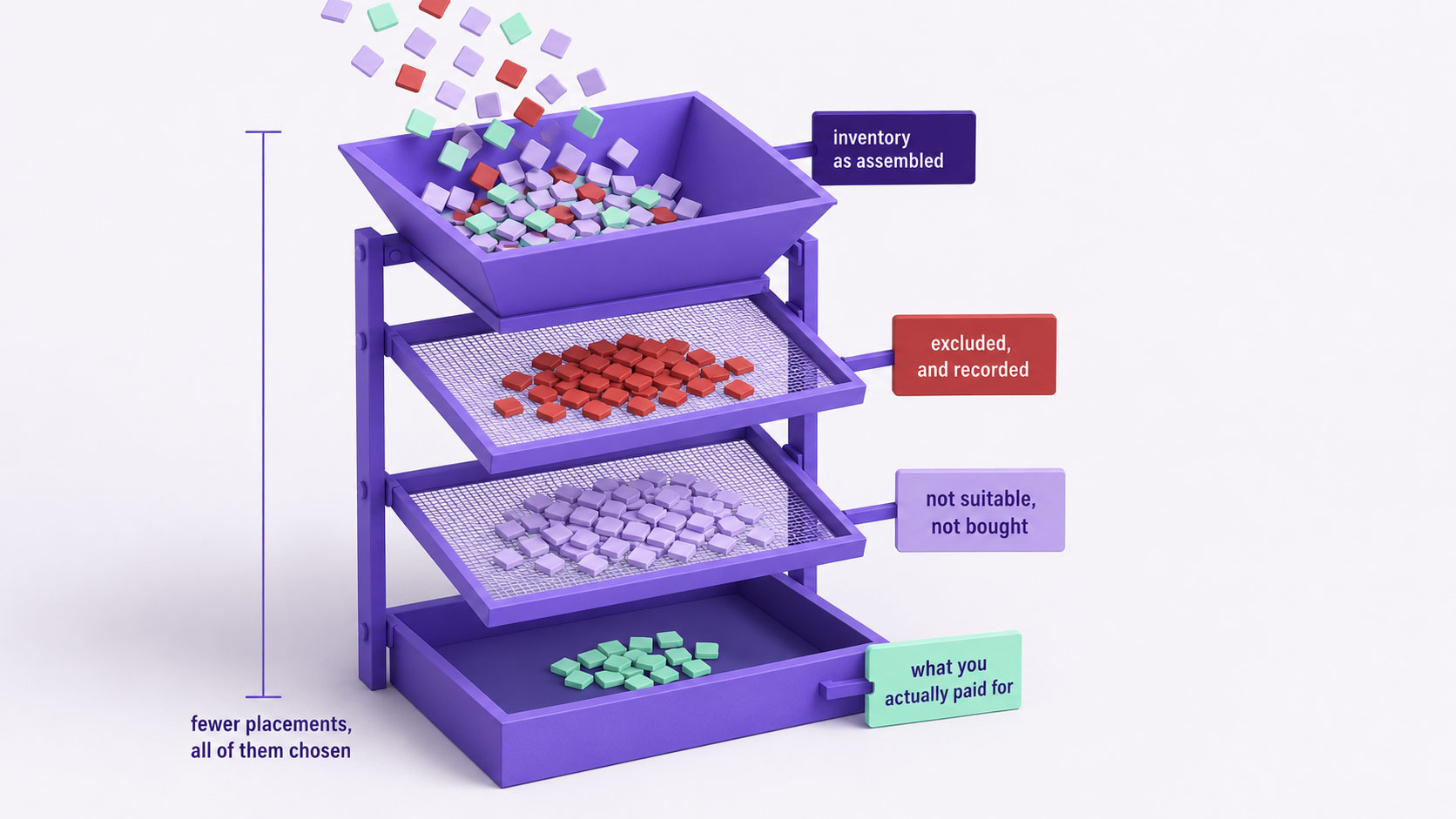
Nobody chose where the ads ran
- Inventory left at default breadth, because narrowing it reduces the view count somebody is being judged on.
- No exclusions applied, so the same unsuitable placements get bought again every flight.
- Geography wider than the service area, producing views from people who could never book you.
- Creative adapted from a website reel, with the offer in a closing card most viewers never reach.
- Success measured in views — the one number that always goes up.
Every placement is a decision
- Inventory narrowed deliberately, accepting fewer views in exchange for views that could convert.
- Exclusions applied and recorded with reasons, so a later manager cannot quietly undo them.
- Geography matched to dispatch, with anything outside it named as waste rather than counted as reach.
- Script written for the format, with trade, service area and offer inside the opening seconds.
- Success measured against booked jobs, with views reported underneath as context.
Four things we do that most agencies will not.
None of these is a feature. Each is a place where a contractor's video budget quietly leaks, and each is a commitment we will put in writing.
Google documents how to exclude specific videos and sites, and where an ad actually ran is visible in every account. On inherited campaigns we almost never find an exclusion history, which means nobody has ever looked.
The exclusion list becomes your asset. It was built with your spend, it is specific to your market, and it leaves with you if we part company.
- Placement report reviewed each cycle and unsuitable inventory excluded, reason recorded.
- The list handed over on request, no negotiation.
What counts as a chargeable view differs by format, and Google documents both the available formats and how cost-per-view bidding works. Deciding format after production means paying to adapt a video written for a different job.
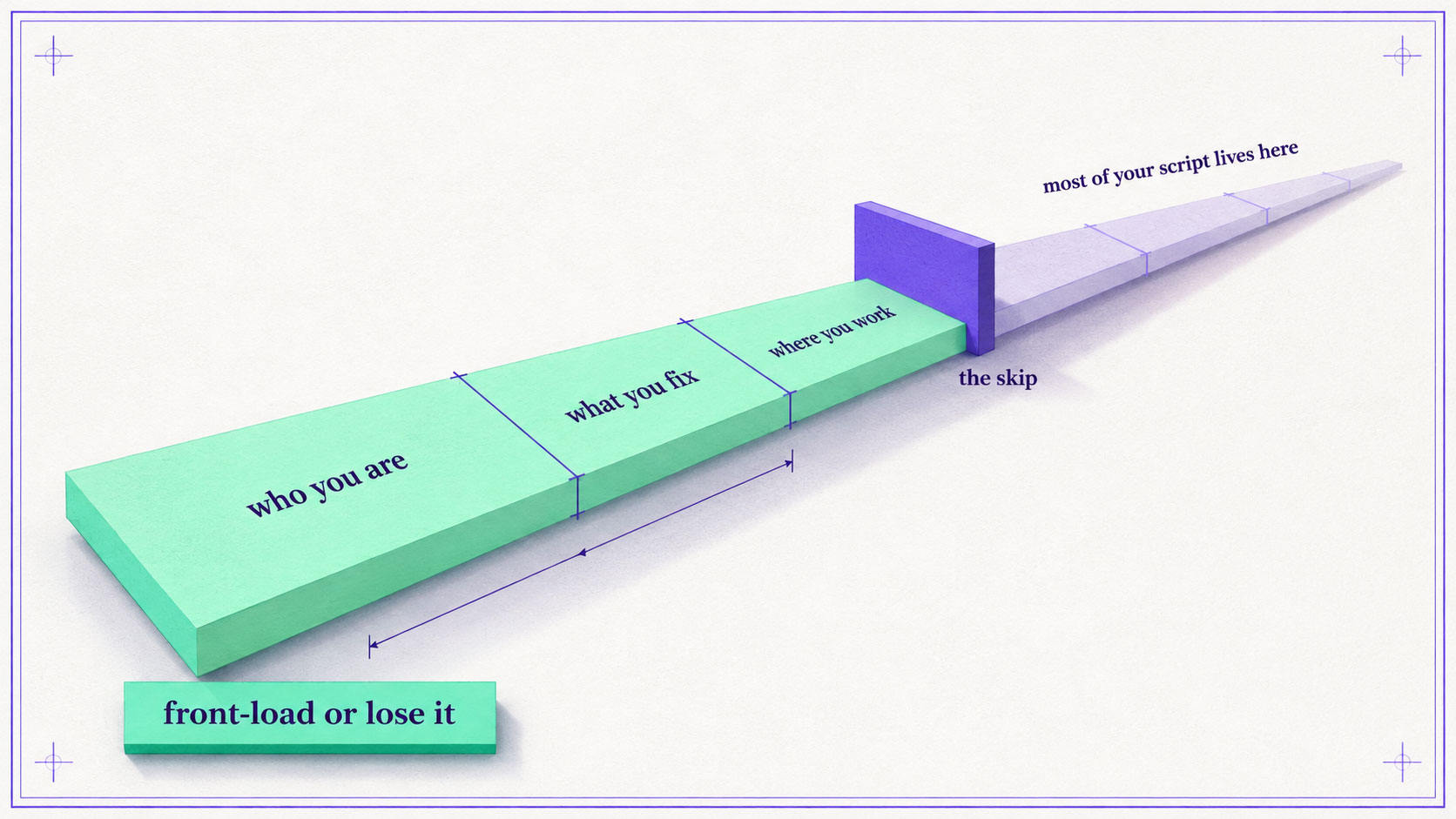
The most expensive design decision in contractor video is a logo animation at the front. In a skippable format those seconds are the whole buy.
- Trade, service area and offer inside the opening seconds, every time.
- Script written to the chosen format rather than trimmed to fit it afterwards.
A single polished production is a campaign with a shelf life. What sustains a video program for a contractor is a routine — a few minutes of footage a week from jobs you are already doing, edited into rotating creative.
It also performs better. Buyers respond to a real crew on a real job far more than to a studio piece, which surprises agencies that came up on national brand work.
- A capture routine designed around your schedule, not a production calendar.
- AI-assisted variant testing so hooks and offers improve without reshooting.
Video sits early in a buyer's decision, so its contribution shows up as branded search, direct calls and recognition rather than as a click. That makes honest measurement harder and more important, not less.
We watch total booked work against flight windows and say plainly where attribution is unresolved, rather than crediting the channel with everything that moved.
- Reported conversions traced into your CRM before they count.
- Branded search and direct traffic tracked against flights, with uncertainty stated.
You have five seconds. Most contractor ads spend them on a logo.
In a skippable format almost every viewer decides within the opening seconds. Whatever sits there is effectively the whole advertisement, and whatever sits after it is a bonus that most of your audience will never see.
What belongs in the opening seconds
The problem, spoken plainly, in the first breath. "If your system is over ten years old" does more work in two seconds than any brand statement, because it sorts the audience instantly — the buyer it describes leans in and everyone else was never going to call you anyway.
The trade and the service area, immediately after. A viewer who cannot tell within four seconds what you do and whether you cover them is a view you paid for and wasted. This is the single most common fault we find in inherited contractor video, and it is free to fix.
A face rather than a logo. An owner or a lead tech on camera outperforms a graphic reliably in the trades. It is not a production-value question; it is that a buyer about to spend serious money wants to see who is turning up.
Everything else — the guarantee, the financing, the accolades, the closing card — belongs after the decision point, where it can only help the viewers who already stayed. Building the script in that order is the difference between a video that gets skipped and one that gets remembered, and it costs nothing extra to do.
- Second one — the problem, in the buyer's words
- Second two — the trade, stated plainly
- Second three — the service area, so they know it is them
- Second four — one clear thing to do next
- Throughout — a face and real work, not a graphic
- After the skip — guarantees, financing and everything else
Inventory first, then creative, then the numbers that matter.
Video is usually run in the reverse order — creative first because it is visible, launched broadly to prove reach, then judged on views because views are what arrived.
Before a camera comes out
- Placement report from any existing campaign read and triaged
- Inventory scope and suitability decided rather than inherited
- Geography matched to the territory you actually dispatch to
- Measurement agreed, because it cannot be added retrospectively
Building the creative
- Format chosen, then the script written for that format
- A capture routine your crews can sustain without a producer
- Claims substantiated before the shoot, because video is expensive to correct
- A destination ready before a single view is bought
Every review cycle
- Placements reviewed, unsuitable inventory excluded, reasons kept
- Branded search and direct calls tracked against flight windows
- Booked jobs reconciled against reported conversions
- The exclusion list maintained as an asset that belongs to you
What a video engagement covers
Video is one channel inside a program. These are the pieces that run alongside it, each a service you can read about and hold us to.
Campaign strategy and management
Format selection, inventory scoping, geography, bidding and exclusion maintenance, run against your territory and capacity rather than a template.
Pairs with: paid search
Script and creative direction
Scripts built for the opening seconds, with a capture routine your crews can sustain and AI-assisted variant testing so hooks improve without reshooting.
Pairs with: content writing
Landing pages that convert
Video sends people who were not looking for you. The destination has to earn a second of attention, and most contractor sites were never built for that.
Pairs with: landing pages and website design
Retargeting the people you reached
Familiarity built and never followed up is familiarity paid for once. Retargeting closes what the first view opened.
Pairs with: remarketing and display
Tracking and lead handling
Call tracking, form routing and CRM integration, so a lead is followed to its outcome rather than counted at the view.
Pairs with: CRM
AI visibility across the program
The recognition video builds shows up as branded search and review volume — the corroboration AI assistants weigh when a buyer asks who to call.
Pairs with: AI SEO and reputation
One location or two hundred, the accounting is the same.
We serve single-location contractors, regional multi-location operators, national franchise systems and private equity portfolios. Video earns its place differently at each scale.
We report the views we stopped buying.
Views are the cheapest and most abundant number in digital advertising, which makes video the easiest channel to report well and the hardest to judge. We lead with what was excluded and what reached your business, and the view count sits underneath as context. It is a less impressive slide and a far more useful one.
We are also built as an AI-first agency rather than a traditional shop that added AI to a service list. That changes how video is planned — the recognition it builds is treated as an input to your AI and organic visibility, not as a standalone brand exercise. And we will tell you when video is the wrong spend: if demand already exists and goes uncaptured, awareness is solving a problem you do not have yet. That finding costs us both the production and the media, and we report it anyway.
Video sits alongside paid search, paid social, streaming and the full digital program. See the work in our case studies.
Six elements, and one that always arrives too late.
Every element below is free to get right and expensive to get wrong, because fixing it means another shoot. This is the checklist we build every contractor script against.
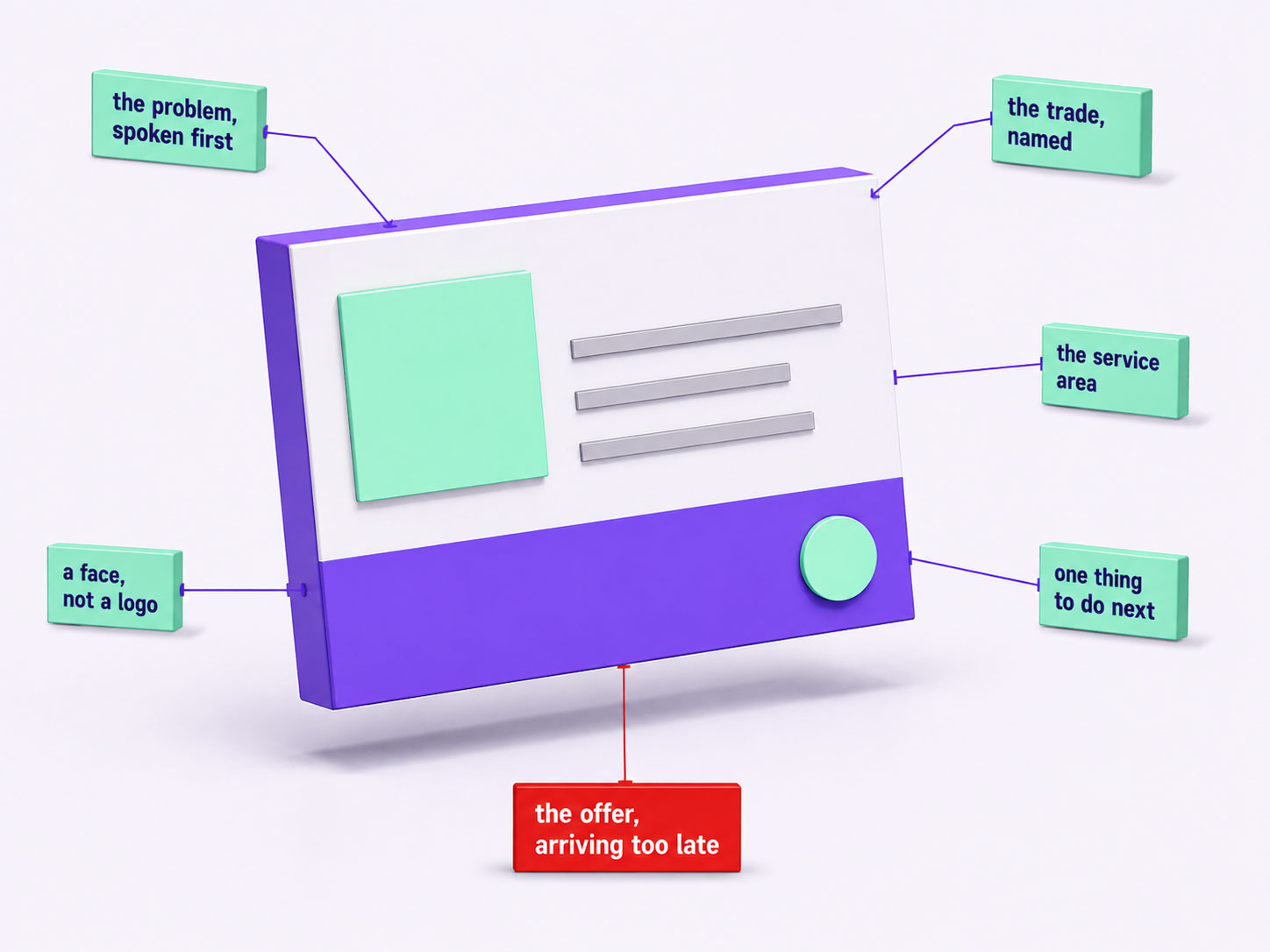
| Element | Where it usually sits | Allegiant Where we put it, and why |
|---|---|---|
| The problem | After the brand introduction | First words spoken — it sorts the audience instantly and costs nothing |
| The trade | Implied by footage | Stated plainly by second two, so nobody has to guess what you do |
| The service area | In the closing card | Named early, so a viewer knows immediately whether it is them |
| A face | Replaced by a logo animation | The owner or a lead engineer on camera — buyers want to see who arrives |
| One next step | Three competing calls to action | A single instruction, matched to the destination page |
| The offer | Final five seconds | Most viewers never reach it — this is the most common fault we inherit |
The last row is worth checking on your current video today. If the offer lives in the closing card, most of the people you paid to reach have already gone — and no amount of budget fixes a structural decision made in the edit.
Four things you can stop paying for
Each is common, profitable for the agency selling it, and worth nothing to a contractor. We would rather lose the line item than defend it.
Views and impressions reported as results. A view is a delivery event, cheap and abundant, and the number most easily grown by loosening every setting. A video report leading with views that never mentions what was excluded is describing how much was bought.
One expensive production sold as a video program. A single polished shoot has a shelf life measured in weeks once frequency starts working against it. What sustains the channel is a routine your crews can keep, and an agency that cannot build you one is selling an event rather than a program.
Broad inventory sold as reach. Widening the pool reliably produces more views and is what the campaign does by default. Views delivered outside your service area are a waste line, not a reach line, and they should be named as such in the report.
Video sold to a business with unanswered demand. If buyers are already searching for you and not finding you, awareness spending is solving a later problem at a higher price. Fix capture first — and any agency that will not tell you that is selling the more expensive option on purpose.
The pattern beneath all four: video is the easiest channel to make look busy, which is exactly why it needs the strictest accounting.
YouTube advertising for home services, answered
Straight answers, including the ones that cost us work. Ask any agency you are considering the same questions.
Does YouTube advertising work for contractors?
For the right jobs, yes. It builds recognition ahead of a large, infrequent decision — system changeouts, plant upgrades, franchise decisions, multi-site rollouts — where a buyer calls the company that already feels known rather than shopping cold. It is weak for emergency work, where somebody with an outage goes straight to local services ads or paid search. Google's format documentation covers the mechanics; whether it fits is a demand question we answer in the audit.
Do we need a professional video production?
No, and one expensive shoot is usually the wrong purchase. What sustains the channel is a routine — a few minutes of footage a week from jobs you are already running, edited into rotating creative. Real crews on real roofs consistently outperform studio work in the trades, which surprises agencies that came up on national brand accounts. We design the capture routine around your schedule so it survives past month three, and pair it with scripting that does the heavy lifting.
Why are our ads showing on videos we would never choose?
Because inventory is assembled by default and the default is broad. Google documents how to exclude specific videos and sites and the placement report exists in every account — on inherited campaigns we almost never find an exclusion history, which means nobody has opened it. Read where the ads ran, exclude what does not belong, and keep the reason with each exclusion so a later manager cannot quietly undo it. The list is yours.
Does a view mean somebody actually watched?
It means the ad played to whatever threshold the format counts, which is a delivery fact rather than an attention fact. Google documents how cost-per-view bidding works and what counts varies between formats. Treat views as an input and judge the channel on booked jobs — which for video means watching branded search and direct calls against flight windows and being honest where attribution is unresolved. The reconciliation standard is on our paid search page.
What should the first five seconds contain?
The problem in the buyer's words, what you do, where you do it, and one thing to do next — in that order, with a face rather than a logo. In a skippable format most viewers decide in those seconds, so whatever sits there is effectively the whole advertisement. The most common fault we inherit is an offer parked in the closing card that most of the paid audience never reaches. It is free to fix in the script and expensive to fix after the shoot, which is why scripting comes before production.
How is this different from OTT or streaming TV?
Different inventory, different buying model and different measurement, though they get sold together often enough to cause confusion. YouTube is an auction with its own formats and targeting controls; connected television behaves differently and is covered on our streaming page. Running both means measuring them separately rather than letting one absorb credit for the other, and reconciling both against booked work.
We also post videos on our own channel. Does that matter here?
They are separate decisions with separate economics — posting builds a library that works over time, advertising buys attention now and stops when the budget does. One thing worth checking if you publish: YouTube requires creators to declare whether content is made for kids and warns that setting it incorrectly can carry consequences under children's privacy law. That is a publishing obligation independent of advertising, it almost never applies to contractor content, and where you are unsure your counsel is the right reader. Related: content strategy.
How does video fit with SEO and AI search?
Directly, and it is a large part of why we run it. The recognition video builds shows up as branded searches, review volume and content signals — exactly the corroboration AI assistants weigh when a buyer asks which company to call instead of typing a query. Treating video as an isolated brand exercise wastes that. We run it inside one program with SEO and AI SEO, which is what being an AI-first agency actually means in practice. Google's best practices cover the paid mechanics.
We are multi-location. Does video scale across markets?
Well, and it is one of the better arguments for video over paid social at scale. Brand creative gets produced once and deployed across markets, with local variants for service area and offer. What does not transfer is the exclusion list — that is market-specific and has to be maintained per location rather than shared blindly. We run this for franchise systems and private equity portfolios with one production standard and per-market reconciliation.
What makes Allegiant different from the agency we use now?
We read the placement report and hand you the exclusion list. We report what was excluded before we report what was delivered. We build a production routine instead of selling a shoot. And we tell you when video is the wrong buy — if demand already exists and goes uncaptured, awareness is the expensive answer to a cheaper problem. We are also an AI-first agency rather than a traditional shop with AI added on, which shapes the whole program. Start with the A.R.C. Report and judge us on the findings.
Find out where your video budget has been playing.
The A.R.C. Report covers your whole marketing position. Where video is in the plan, we read the placement report, check how much delivery sits outside your service area, and look at whether the opening seconds are doing any work at all. Findings are yours whether or not we work together.
- Placement report read and unsuitable inventory identified
- Geography checked against the territory you actually dispatch to
- Opening seconds assessed against what belongs there
- Format and bidding reviewed against what you are charged for
- Branded search and direct calls tracked against flight windows
- A straight answer if video is the wrong spend for you right now
Explore the wider program: all services, paid search, paid social, AI SEO and the A.R.C. Report.
Tell us your trade and the markets you serve, and we will tell you what your video spend is buying.
No cost, no commitment. We will follow up by email or phone to walk you through the findings.

